


CRUSTY NO KNEAD OLIVE BREAD
- WineCheeseScallops

- Dec 4, 2025
- 6 min read
Imagine pulling a golden, crackly artisan loaf straight from your oven—no kneading, no fuss, just pure bakery-level magic. This Crusty No Knead Olive Bread is one of those rare recipes that feels luxurious yet shockingly simple. With its rustic exterior, pillowy-soft interior, and briny bursts of chopped olives, this bread tastes like something you'd pick up from a warm café in the Mediterranean countryside. And the best part? The dough does the work while you sleep!

Perfect for pairing with pasta night, dipping into olive oil, layering with cheese, or just enjoying warm with butter, this loaf instantly upgrades any meal. It’s the kind of bread that draws a crowd with its aroma alone—earthy, savory, and deeply comforting. If you've never made artisan bread at home before, this will be the one that makes you say: “Why didn’t I try this sooner?”

We’re excited to share that Wine Cheese Scallops is now part of the Amazon Affiliate Program! 🎉 When you shop using our special link, ANY item you purchase—whether it’s kitchen gear, home essentials, books, or even dog treats—helps support our blog at no extra cost to you.
It’s a simple way to help us keep creating recipes, reviews, and foodie fun you love. So whether you're restocking pantry staples or grabbing your next favorite gadget, your support means the world to us. 🛒💛

Olives
Olives bring the soul of the Mediterranean straight into this bread. Their briny, savory depth transforms the dough, creating pockets of flavor in every slice. Depending on the type you use—Kalamata, Castelvetrano, or a simple pitted green olive—you’ll get different notes ranging from buttery and mild to rich and tangy. Olives also contribute moisture, helping the bread stay soft inside while enhancing the aroma. They’re full of healthy fats, antioxidants, and a satisfying saltiness that makes this loaf addictive in the best way.
Bread Flour
Bread flour is the backbone of any good artisan loaf. With its higher protein content, it creates more gluten structure, giving the bread that classic chewy interior and gorgeous airy crumb. While all-purpose flour is a fine substitute, bread flour elevates texture, stability, and rise. It ensures your loaf develops that picture-perfect crust—shatteringly crisp on the outside, soft on the inside, and full of rustic character. For a no-knead recipe, bread flour is especially valuable because it maximizes gluten development without labor.

Sponsored Ad
Recipe Origin

This bread is inspired by the classic overnight no-knead method popularized by artisan bakers who believed that good bread shouldn't require complicated techniques. The concept is brilliant: mix everything in a bowl, leave it alone, and let time and hydration develop gluten naturally. Adding olives gives the loaf a Mediterranean twist, reminiscent of bakery breads found in Italy, Greece, and coastal cafés along the Adriatic Sea.
For home cooks, this recipe is a dream come true—minimal effort, maximum payoff. It’s the perfect starter bread for beginners and a dependable favorite for seasoned bakers. Whether you're serving charcuterie, hosting friends, or simply wanting homemade bread without babysitting dough, this recipe brings the warmth, aroma, and flavor of artisan European baking right into your kitchen.
Sponsored Ad
Tips, Serving Suggestions, & Storage Advice

Use room-temperature olives to keep the dough from tightening up during mixing.
Roughly chop olives rather than finely slicing to prevent the dough from becoming streaky or too wet.
Make sure your water is between 80–90°F so the yeast activates without overheating.
Always use a glass or ceramic bowl—plastic wrap adheres better, ensuring a proper rise.
Keep the dough covered tightly to retain moisture and heat during the 12–18 hour rise.
Parchment paper is essential for easy transfer into a hot Dutch oven—no sticking, no burns.
If your dough seems very loose, lightly flour your hands rather than adding extra flour to the dough.
Letting the Dutch oven preheat for a full 30 minutes ensures the crust sets instantly for maximum crunch.
Allow the loaf to cool at least 20 minutes to prevent gummy slices.
Store leftover bread in a breathable paper bag for the crispiest crust, or wrap in plastic for a softer loaf.
To revive leftover slices, warm in a 350°F oven for 5–7 minutes.
This bread freezes beautifully—slice first, freeze, then toast whenever needed.
Sponsored Ad
Unique Recipe Qualities
Requires no kneading, mixers, or special equipment beyond a Dutch oven.
Creates a true artisan-style crust with minimal effort.
Long fermentation develops complex, bakery-quality flavor.
Olives add bursts of briny depth in every bite.
Extremely customizable—swap olives for herbs, cheese, or roasted garlic.
Foolproof technique suitable for beginners.
Produces a high-hydration dough that yields an airy, open crumb.
Versatile for sandwiches, dipping, snacking, or charcuterie boards.
Only a few inexpensive pantry staples are required.
Impresses guests without demanding any advanced baking skills.
The Dutch oven method creates consistent results every time.
🎉 Exciting News for Wine Cheese Scallops! 🎉 We’re now officially Amazon Affiliates! If you’re planning any Amazon shopping, you can support our blog just by using our link – no extra cost to you, no matter what you’re buying! 🛒💖
🔗 AMAZON.COM 🔗
So whether it’s kitchen gadgets, books, holiday gifts, or anything else you need, every purchase through our link helps us keep sharing delicious recipes, foodie tips, and restaurant finds! 🌟 Thank you for being part of our journey!
Crusty No-Knead Olive Bread

Ingredients
3 ½ cups bread flour (plus extra for dusting; all-purpose works as a substitute)
2 teaspoons kosher salt
¾ teaspoon instant yeast (or active dry yeast)
1 ⅓ cups warm water (80–90°F)
1 heaping cup pitted olives, roughly chopped
1 tablespoon extra-virgin olive oil
Instructions
Before You Begin:Do not grease the bowl. Do not use a mixer—the dough will be too sticky. A glass or ceramic bowl is best because plastic wrap adheres more securely during rising.
1. Mix the Dough
In a large mixing bowl, whisk together the flour, salt, and yeast. Add the chopped olives and stir with a wooden spoon. Add the warm water and olive oil, then mix until all the flour is moistened. Use your hands if needed to finish bringing the dough together.
2. First Rise (12–18 Hours)
Cover the bowl tightly with plastic wrap and leave it at room temperature for 12–18 hours. The dough should double in size, cling to the sides of the bowl, and show small bubbles on the surface.
3. Shape the Dough
Lightly flour your work surface. Gently tip the dough out and fold it into itself to form a loose ball.
4. Second Rise (30 Minutes)
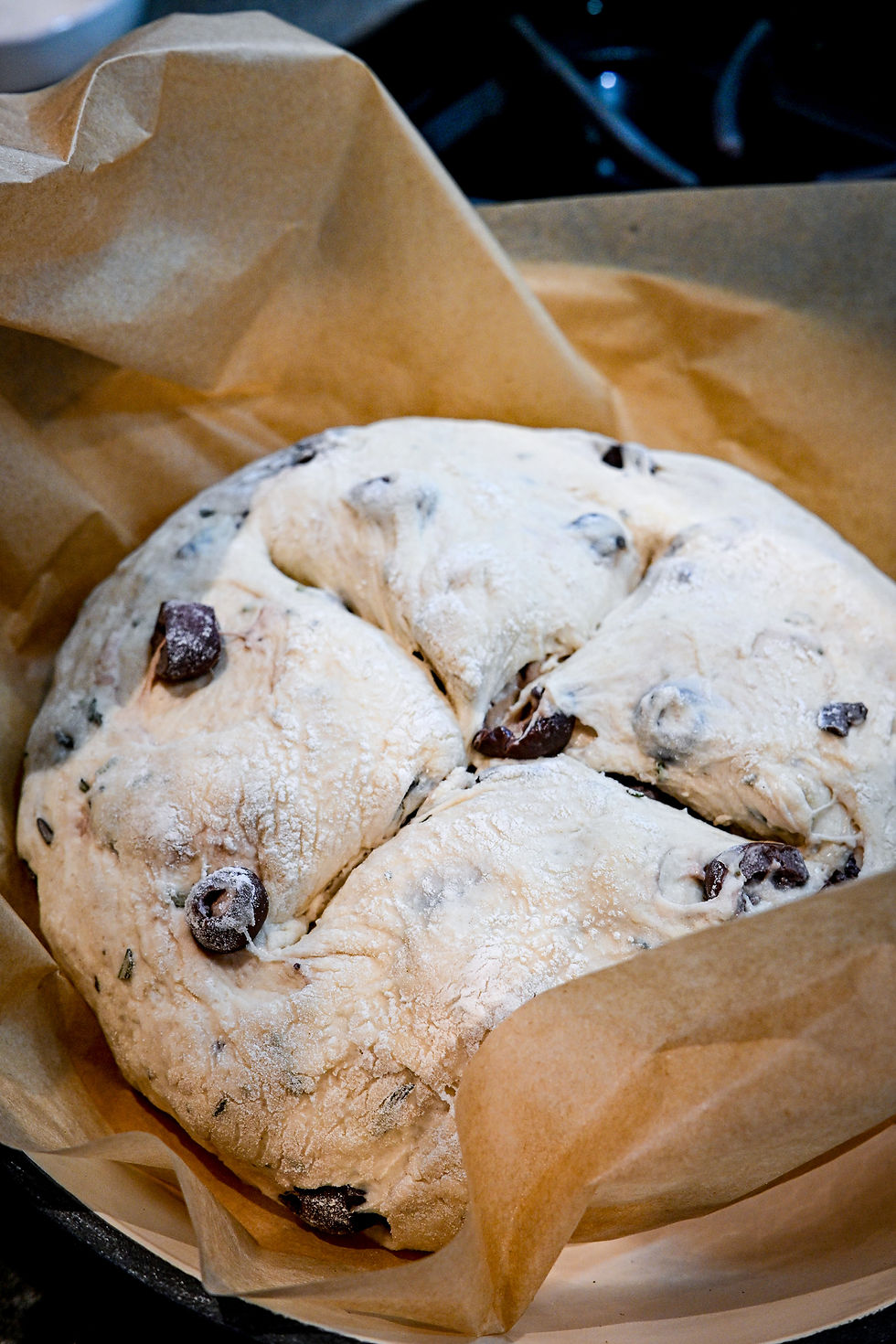
Place the dough on a large piece of parchment paper (safe for high heat). Use a sharp knife or kitchen shears to score an X on top. Set the dough—still on the parchment—into a bowl to keep its shape. Cover lightly with a kitchen towel or plastic wrap and let rise for 30 minutes.
5. Preheat the Oven
Place your Dutch oven with the lid into the oven and preheat to 475°F. Heat the pot for a full 30 minutes.After preheating, carefully lift the dough using the parchment paper and transfer it into the hot pot. Cover with the lid.
6. Bake
Bake for 25 minutes covered. Remove the lid and bake an additional 8–10 minutes, until golden brown.Doneness check: Tap the loaf—if it sounds hollow, it’s ready. For precision, the internal temperature should be about 195°F.
7. Cool & Store
Remove the bread from the Dutch oven and cool on a wire rack for at least 20 minutes before slicing.Store leftover bread covered at room temperature for up to 1 week.

MUST-HAVE TOOLS FOR THIS RECIPE
We’re so excited for you to try this recipe! To make it even easier, we’ve put together a list of our favorite kitchen tools that are super helpful for this recipe. By using our affiliate links below, you’ll not only be getting top-notch products but also supporting our blog, Wine Cheese Scallops. Thank you so much for your support—happy cooking!
Sponsored Ad
FAQ Section

1. Can I use all-purpose flour instead of bread flour?
Yes—bread flour gives better structure, but all-purpose works well too.
2. Can I use different types of olives?
Absolutely! Kalamata, Castelvetrano, black olives, or mixed olives all work beautifully.
3. My dough is very sticky—is that normal?
Yes. High-hydration dough is essential for no-knead bread. Use floured hands instead of adding extra flour.

4. What if I don't have a Dutch oven?
A heavy oven-safe pot with a lid works. The lid traps steam to create the crust.
5. Can I add herbs or cheese?
Yes! Rosemary, thyme, garlic, or Parmesan all integrate well.
6. Why does it need such a long rise?
The long rise develops flavor and creates the light, airy texture.
7. Can I refrigerate the dough overnight?
Yes—refrigeration slows the fermentation and deepens flavor.
8. How do I know my bread is fully baked?
It should sound hollow when tapped or reach about 195°F internally.
9. Is parchment paper required?
Not strictly, but it makes transferring the dough into the hot pot much safer and easier.
10. Can I freeze the bread?
Yes—freeze whole or sliced. Toast to reheat.

For the freshest ingredients to recreate dishes like these at home, we always visit our local gem, General Steak and Seafood.
Their high-quality selection never disappoints!
Sponsored Ad


Comments